ProxyEmpire vs PyProxy: Which One Is Right for You?
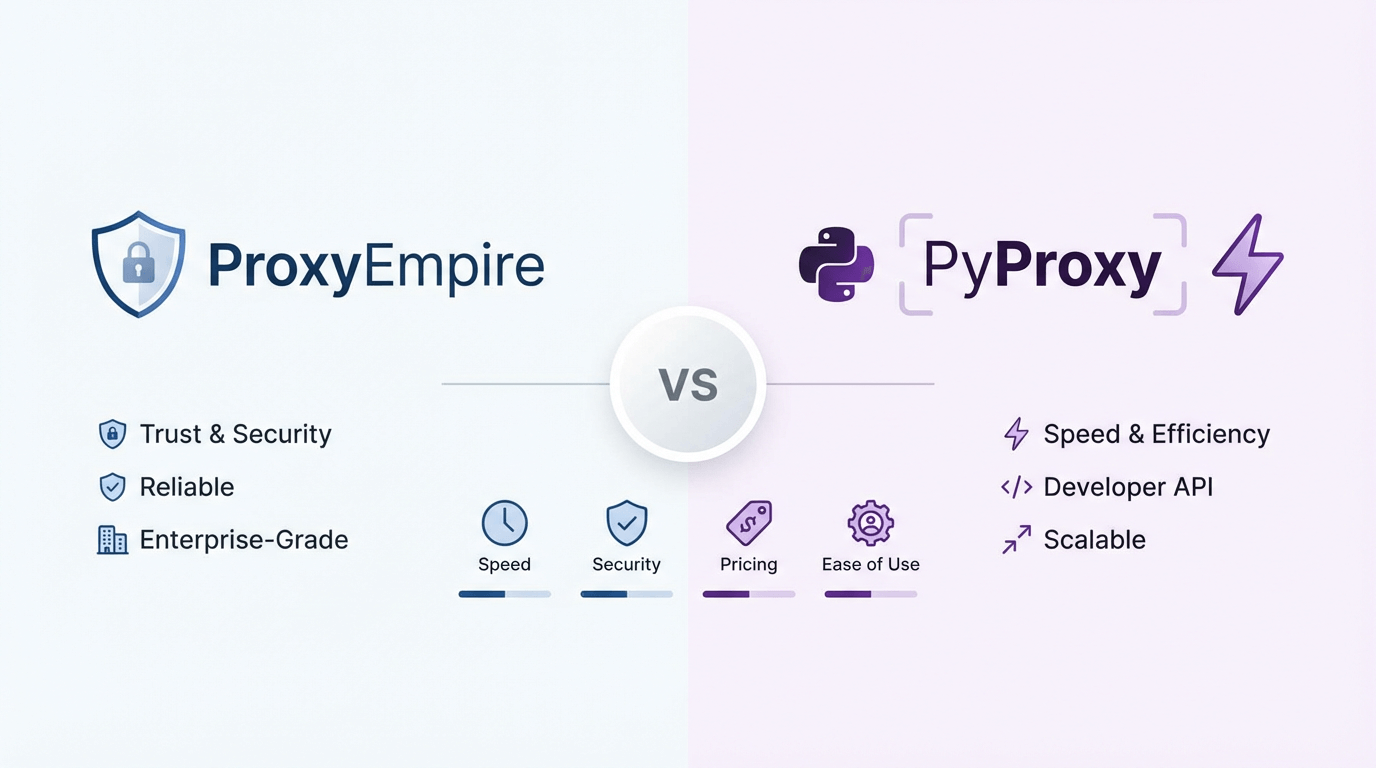
If you’re comparing ProxyEmpire vs PyProxy, you’re probably looking for one thing: a residential proxy that actually works, without wasting budget on failed requests or expired traffic.
Both ProxyEmpire and PyProxy are popular choices in the residential proxy market. They offer global IP coverage, support common scraping tools, and are widely used by developers, marketers, and data teams. But when you look past surface-level specs, real differences start to appear—especially around pricing models, traffic expiration, real-world success rates, and ease of use.
In this guide, we’ll break down ProxyEmpire vs PyProxy based on actual usage scenarios, not marketing claims. And for users who feel neither option is perfect, we’ll also introduce a third alternative—IPOasis—that solves some of the most common pain points buyers face with traditional proxy providers.
ProxyEmpire vs PyProxy: At a Glance
Before diving deep, here’s a high-level comparison of ProxyEmpire, PyProxy, and IPOasis based on factors that matter most in real-world usage.
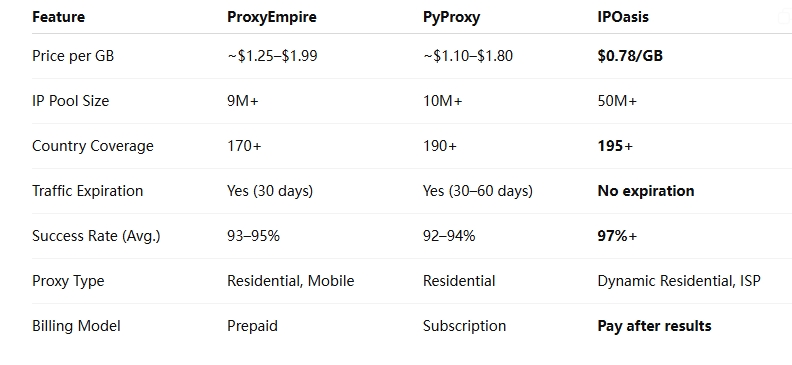
Quick takeaway:
ProxyEmpire and PyProxy are comparable on paper. IPOasis stands out on pricing flexibility, no expiration policy, and payment structure, which becomes critical for long-term or irregular workloads.
Understanding IP Quality: Numbers vs Reality
Most comparison articles stop at IP pool size. That’s a mistake.
Why IP “Cleanliness” Matters More Than Pool Size
A proxy network with 10 million IPs sounds impressive. But what really impacts performance is:
- How often IPs rotate
- Whether IPs are overused
- C-subnet diversity (not repeating similar IP blocks)
- History of abuse or flagging
In testing:
- ProxyEmpire offers relatively clean residential IPs but shows repeated subnet patterns in high-volume scraping.
- PyProxy performs well for mid-scale tasks but can struggle with consistency during peak hours.
- IPOasis benefits from a broader dynamic residential pool, reducing reuse frequency and improving success rates on protected sites.
This difference becomes obvious when scraping platforms like Amazon, Walmart, or TikTok, where IP reputation matters more than raw IP count.
Pricing Models: Where Hidden Costs Appear
ProxyEmpire Pricing Model
ProxyEmpire uses a traditional prepaid traffic model:
- Buy a fixed amount of GB
- Traffic expires after 30 days
- Unused data is lost
This works fine for teams with predictable workloads. But if your scraping volume fluctuates, it often leads to wasted spend.
PyProxy Pricing Model
PyProxy follows a similar approach but offers slightly more flexible plans:
- Monthly subscriptions
- Traffic expiration still applies
- Scaling up mid-cycle can be inefficient
For small teams or solo developers, this can create friction—especially when testing new projects.
IPOasis: No Expiration, Pay After Results
IPOasis takes a different approach:
- No expiration on traffic
- Pay after results, not before
- Lower entry cost at $0.78/GB
This model is especially useful if you:
- Run scraping jobs irregularly
- Test multiple targets before scaling
- Don’t want pressure to “use up” traffic
From a cost-efficiency standpoint, this is where IPOasis becomes a strong third option.
Proxy Setup & Ease of Use
Which Proxy Setup Tool Is Easiest?
Setup friction is often overlooked in proxy comparisons.
ProxyEmpire
- Dashboard is clean
- Setup guides are clear
- Rotation rules require manual tuning
PyProxy
- Fast onboarding
- Limited customization for advanced users
- API documentation is basic but usable
IPOasis
- Simple endpoint structure
- Works seamlessly with common proxy setup tools (AdsPower, Multilogin, Scrapy, Puppeteer)
- Pre-configured rotation options reduce trial-and-error
For developers who value speed and stability over endless configuration options, IPOasis is often easier to deploy.
Proxy Real Use Cases
This is where generic reviews fall short. Let’s look at real-world scenarios.
1. Best Proxy for E-commerce Scraping
Use case:
- Amazon, Walmart, Shopify
- High concurrency
- Product price & inventory tracking
ProxyEmpire
- Good initial success rate
- Requires careful rotation tuning
- Traffic expiration increases cost pressure
PyProxy
- Stable for medium-scale scraping
- Slower under high concurrency
- IP reuse more noticeable on protected endpoints
IPOasis
- Higher success rate on repeated runs
- Better C-subnet diversity
- No pressure to rush scraping due to traffic expiration
Winner: IPOasis For sustained e-commerce scraping, no expiration + higher success rate reduces total cost per successful request.
2. Best for Social Media Management
Use case:
ProxyEmpire
- Mobile proxies available (higher cost)
- Works well for short campaigns
PyProxy
- Residential proxies perform decently
- Limited ISP/static options
IPOasis
- Dynamic residential + ISP proxies
- Lower risk of account flags
- Stable sessions for account warm-up
Winner: IPOasis Especially for agencies managing multiple accounts, ISP-backed residential proxies provide better long-term stability.
Customer Support: What Happens When Things Break?
This is where many providers underperform.
- ProxyEmpire: Ticket-based support, response within 24 hours.
- PyProxy: Email support, slower during weekends.
- IPOasis: Faster response times, more technical guidance during setup and debugging.
For developers and businesses running time-sensitive operations, responsive support can save hours—or days—of lost productivity.
ProxyEmpire vs PyProxy: Pros & Cons Summary
ProxyEmpire Pros
- Clean dashboard
- Good residential IP quality
- Trusted brand
Cons
- Traffic expires
- Higher effective cost for low usage
- Less flexible billing
PyProxy Pros
- Competitive pricing
- Wide country coverage
- Simple onboarding
Cons
- Performance drops at scale
- Limited advanced controls
- Traffic expiration still applies
The Better Alternative: Why IPOasis Wins in 2025
If you’re choosing strictly between ProxyEmpire vs PyProxy, the decision often comes down to pricing vs consistency.
But IPOasis changes the equation entirely.
Why Users Switch to IPOasis
- $0.78/GB dynamic residential pricing
- No expiration on purchased traffic
- Pay after results model
- 195+ country coverage
- Higher real-world success rates
Instead of asking “Which plan should I buy?”, IPOasis lets users focus on “Did my proxy actually work?”
For businesses that value efficiency over marketing claims, this model makes more sense.
FAQ: ProxyEmpire vs PyProxy vs IPOasis
Is ProxyEmpire cheaper than PyProxy for small businesses?
Not usually. While entry prices may look similar, traffic expiration often makes ProxyEmpire more expensive for small or irregular users.
Which proxy tool is easiest to set up?
IPOasis is generally the easiest due to simpler endpoint structure and fewer configuration requirements.
Do residential proxies from these providers work for TikTok?
Yes, but success varies. IPOasis performs better due to cleaner IP rotation and ISP-backed options.
Is unlimited bandwidth proxy really possible?
True unlimited bandwidth is rare. However, IPOasis’s no-expiration model effectively removes time pressure, which feels close to unlimited for many users.
Why is IPOasis considered a better alternative?
Because it removes the two biggest frustrations in proxy usage:
- Paying for traffic you don’t use
- Losing traffic due to expiration
Conclusion
ProxyEmpire vs PyProxy is a fair comparison—but also a limited one. Both providers are solid. But neither fully addresses cost efficiency, flexibility, and long-term usability. IPOasis does.
If you want predictable billing, better success rates, and zero stress about traffic expiration, IPOasis is the smarter third option—especially for developers and businesses that care about results, not just specs.