Backconnect Proxy Service: The Ultimate Guide for High-Efficiency Scraping
A backconnect proxy service solves one of the biggest problems in large-scale web activity: traditional proxies fail when traffic grows. IPs get blocked, sessions break, and managing rotations becomes a full-time job. Backconnect proxies remove that complexity by giving you a single access point that automatically routes your traffic through a massive rotating IP pool.
If you’re scraping data, running ad verification, or managing multiple accounts at scale, understanding how a backconnect proxy service works—and choosing the right provider—can save you time, money, and constant troubleshooting. This guide explains backconnect proxies and shows how IPOasis turns the concept into a production-ready solution.
What Is a Backconnect Proxy Service?
A backconnect proxy service is a proxy system that lets you connect to one fixed endpoint, while the provider automatically assigns and rotates IPs in the background. You don’t receive a list of IPs to manage. Instead, you connect once, and the backconnect server handles everything else.
From a user perspective, it feels simple: one host, one port, one set of credentials. Behind the scenes, your requests are being routed through a rotating IP pool that changes IPs per request, per session, or based on custom rules. This setup dramatically reduces blocks and simplifies large-scale operations.
This is why backconnect proxies are often called the most “hands-off” proxy solution. They are especially popular with teams that need stability without micromanaging IPs.
How Does a Backconnect Proxy Work?
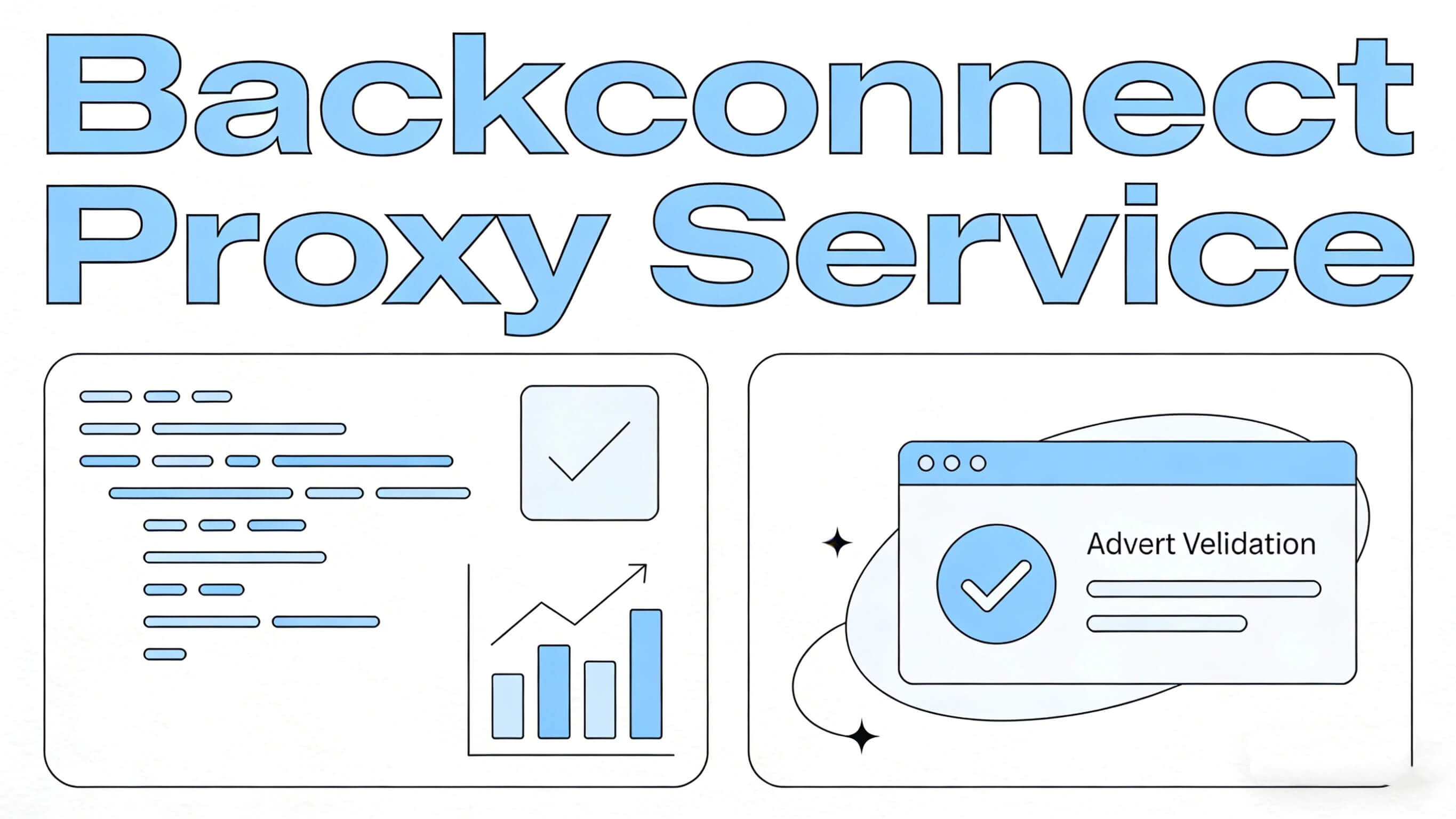
The easiest way to understand a backconnect proxy service is to visualize the traffic flow:
You → Backconnect Server → Rotating IP Pool → Target Website
When your application sends a request, it first hits the backconnect gateway. That gateway selects a clean IP from its pool—based on your configuration—and forwards the request to the target site. To the website, it looks like a real user request coming from a legitimate IP.
Each new request can use a different IP automatically, or keep the same IP for a session if needed. You never see the rotation happening, and you don’t need to code it yourself. This automation is what makes backconnect proxies far more efficient than manually rotating static proxies.
Backconnect Proxy Service vs Regular Proxies
Many users confuse backconnect proxies with standard rotating proxies, but the difference is significant.
With regular proxies, you typically receive:
- A list of IP: Port combinations
- Manual rotation or basic round-robin logic
- Higher risk of IP reuse and blocks
With a backconnect proxy service, you get:
- One endpoint instead of hundreds of IPs
- Automatic rotation handled server-side
- Smarter IP assignment from a large pool
This means fewer connection errors, less maintenance, and much higher scraping efficiency—especially when concurrency increases.
Key Benefits of a Backconnect Proxy Service
One of the biggest advantages is high anonymity. Because IPs rotate constantly and come from large pools, websites find it harder to fingerprint your activity. This significantly lowers ban rates.
Another major benefit is automatic rotation. You don’t need scripts to swap IPs or manage cooldowns. The backconnect server does it for you, which is ideal for long-running jobs.
Backconnect proxies also improve scraping efficiency. Requests fail less often, retries are smoother, and throughput is more consistent. For businesses, this translates into faster data collection and lower operational costs.
Best Use Cases for Backconnect Proxies
Backconnect proxy services shine in web scraping. Whether you’re collecting product data, SERP results, or public datasets, rotating IPs are essential to avoid rate limits and IP bans.
They are also widely used for ad verification. Backconnect proxies allow you to view ads from different locations and IPs without triggering fraud detection systems.
Another common use case is price monitoring and market research, where frequent requests to the same sites would quickly get blocked with static IPs. Backconnect proxies keep those requests looking natural.
Choosing the Best Backconnect Proxy Service: Why IPOasis
Not all backconnect proxy services are built the same. IPOasis is optimized for high-concurrency workloads, where thousands of requests need to run smoothly without IP exhaustion.
One major advantage is IPOasis’s no-expiration traffic model. You don’t lose unused bandwidth, which is critical for teams with fluctuating workloads. This alone makes planning and scaling much easier.
IPOasis also offers global coverage across 195+ locations, allowing precise country and regional targeting. Combined with a clean residential IP pool and stable routing, this makes IPOasis a reliable backconnect solution for serious operations—not just small tests.location
Frequently Asked Questions About Backconnect Proxy Service
Is a backconnect proxy the same as a rotating proxy?
They are related, but not identical. A backconnect proxy is a specific implementation where rotation happens behind a single gateway.
How many IPs are in a backconnect pool?
It depends on the provider. IPOasis maintains large residential pools across global regions to avoid IP reuse.
Can I target specific countries or regions?
Yes. IPOasis supports geo-targeting across more than 195 locations.
How do I set up a backconnect proxy in my code?
You usually only need to set one proxy host, port, username, and password—no IP lists required.
Conclusion
A backconnect proxy service is no longer optional for high-scale scraping or automation—it’s the most efficient way to stay anonymous, avoid blocks, and simplify proxy management. By routing traffic through a smart rotation gateway, backconnect proxies remove the operational pain of traditional proxy setups.
IPOasis takes this model further with no-expiration traffic, global coverage, and infrastructure built for concurrency. If you’re looking for a backconnect proxy service that actually scales with your business, IPOasis is a strong place to start.