Bingle Proxy Guide: Setup, Safety & Better Alternatives
Bingle Proxy is often searched by users who want better online privacy, access restricted content, or manage multiple accounts without exposing their real IP address. Whether you’re trying to browse anonymously, bypass geo-blocks, or reduce tracking, understanding how Bingle Proxy works—and its limitations—is key to using it safely and effectively. This guide breaks everything down in plain English, from setup to real-world use cases, and explains how combining Bingle Proxy with high-quality residential proxies can significantly improve results.
What Is Bingle Proxy and How Does It Work?
Bingle Proxy is a proxy-based browsing solution designed to mask your real IP address and route your traffic through an intermediary server. When you use Bingle Proxy, websites no longer see your home or office IP but instead see the proxy IP, which helps reduce tracking and basic IP-based restrictions. Unlike a browser extension that only hides part of your traffic, a proxy works at the network request level, meaning most websites treat you as a different user entirely.
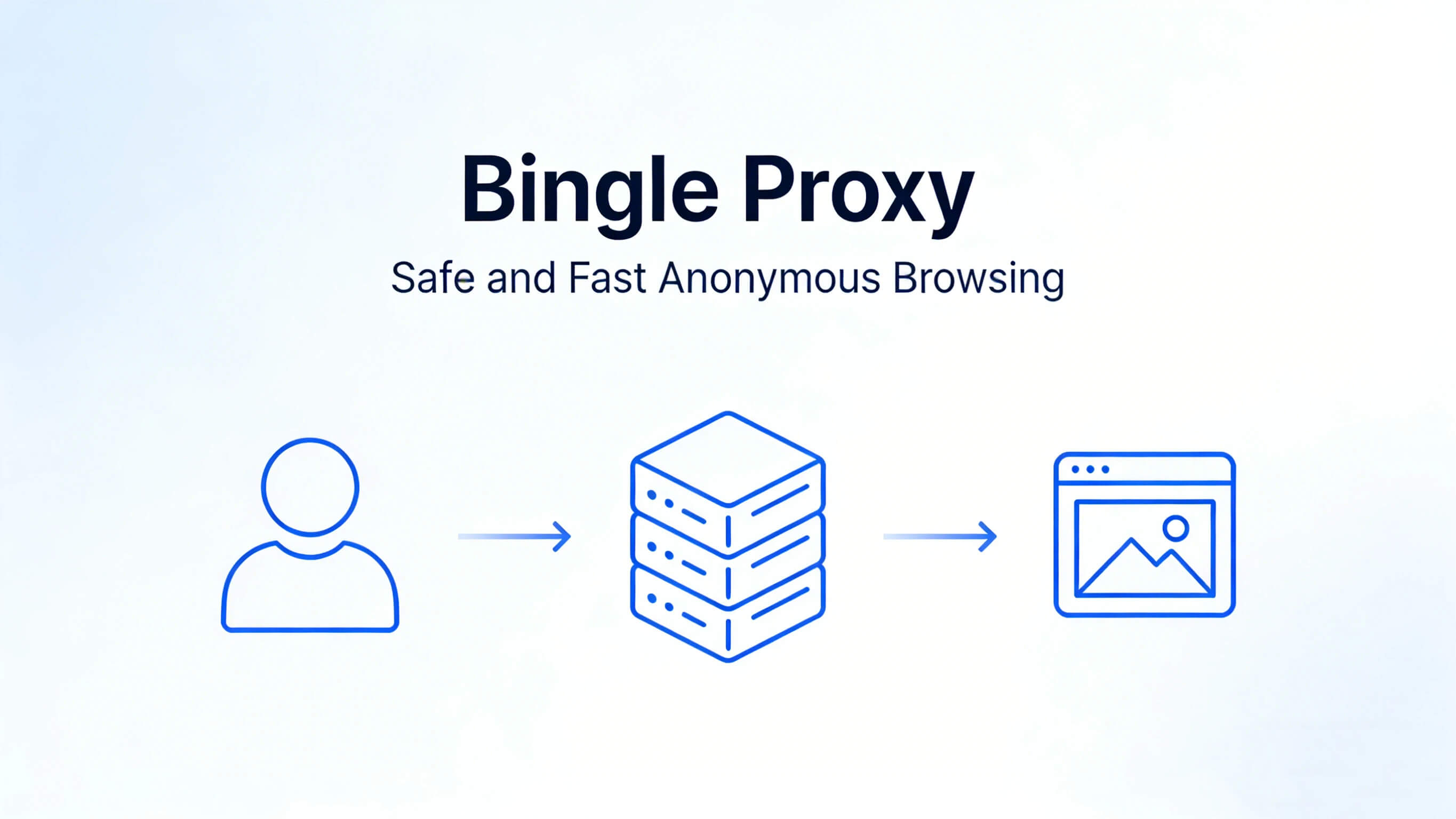
In simple terms, your connection flow becomes: You → Bingle Proxy Server → Target Website. This setup helps users access content that may be blocked in their country or avoid IP-based rate limits. However, the effectiveness of Bingle Proxy largely depends on the quality and reputation of the IPs it uses. Lower-quality IPs may still trigger blocks or captchas on strict platforms.
Key Features and Benefits of Bingle Proxy
Bingle Proxy is popular mainly because it lowers the barrier to entry for users new to proxies. It usually requires minimal configuration and works with common browsers and tools. For casual users, this simplicity is a major benefit.
Another advantage is basic anonymity. By hiding your original IP address, Bingle Proxy helps reduce exposure to website tracking, ad profiling, and simple fingerprinting techniques. It can also help with accessing region-restricted content when advanced verification is not in place.
That said, Bingle Proxy is best suited for light to moderate use. For high-risk activities, heavy automation, or platforms with strong anti-bot systems, additional layers—like residential proxies—are often necessary.
Bingle Proxy Setup: Step-by-Step Guide for Beginners
Getting started with Bingle Proxy is relatively straightforward, even if you have no prior proxy experience. First, you choose your proxy endpoint or tool provided by Bingle Proxy. This usually comes in the form of an IP address and port or a simple configuration interface.
Next, you apply the proxy settings to your browser, application, or system network settings. Most users test the setup by visiting an IP-check website to confirm their IP has changed. Once confirmed, you can start browsing or running tasks through the proxy.
For beginners, the key is to start slow. Test on low-risk websites first, monitor speed and stability, and avoid logging into sensitive personal accounts until you fully understand how the proxy behaves.
Bingle Proxy vs VPN: Which One Is Right for You?
Although Bingle Proxy and VPNs are often compared, they solve slightly different problems. A VPN encrypts all traffic from your device and routes it through a single tunnel, which is ideal for general privacy and public Wi-Fi security. A proxy like Bingle Proxy, on the other hand, usually focuses on IP masking and request routing rather than full encryption.
Another key difference is flexibility. Proxies allow more granular control, such as routing only specific apps or traffic types, while VPNs are typically all-or-nothing. Proxies also integrate better with automation tools, scrapers, and multi-account setups.
If your goal is secure everyday browsing, a VPN may be enough. If your goal is account isolation, region targeting, or scale, Bingle Proxy combined with residential proxies is often the better choice.
Advanced Tip: Enhancing Bingle Proxy with IPOasis Residential Proxies
One limitation of basic proxy tools is IP quality. Many blocks happen not because you use a proxy, but because the IP itself has a bad reputation. This is where IPOasis residential proxies make a real difference.
By routing Bingle Proxy traffic through IPOasis dynamic residential proxies, you use real ISP-assigned IPs instead of easily flagged proxy IPs. This dramatically reduces captchas, blocks, and sudden connection drops. Residential IPs also rotate naturally, helping you stay under detection thresholds on sensitive platforms.
For users managing multiple accounts, scraping data, or accessing region-restricted services, this combination offers a far more stable and professional setup than Bingle Proxy alone.
Common Use Cases for Bingle Proxy
Bingle Proxy is often used for anonymous browsing, especially when users want to avoid basic IP tracking or view content unavailable in their region. It’s also common in social media management, where users need to separate accounts to avoid linkages.
Another use case is e-commerce research, such as checking localized pricing or availability without triggering rate limits. Some users also rely on it for light data gathering, provided the target site does not have aggressive anti-bot measures.
In all these scenarios, success depends on matching the tool to the risk level. The more sensitive the platform, the more important IP quality becomes.
Bingle Proxy FAQ
Is Bingle Proxy free?
Some versions or trials may be available, but free proxies usually come with speed, stability, and security limitations.
Is Bingle Proxy safe to use?
It can be safe for low-risk browsing, but users should avoid entering sensitive personal or financial data without additional protection.
Can Bingle Proxy unblock social platforms like TikTok or Instagram?
It may work for basic access, but platforms with strong detection often require residential proxies for consistent results.
Is my data encrypted when using Bingle Proxy?
Proxies generally do not encrypt traffic by default, unlike VPNs. Encryption depends on HTTPS and the underlying setup.
Can I use Bingle Proxy with automation tools?
Yes, but stability and success rates improve significantly when paired with high-quality residential proxies like IPOasis.
Conclusion: Is Bingle Proxy Worth Using?
Bingle Proxy is a useful entry-level solution for users who want basic anonymity, simple setup, and IP masking. It works well for casual browsing, light multi-account use, and low-risk tasks. However, as online platforms become stricter, IP quality matters more than the proxy tool itself.
For users who need reliability, scale, and long-term success, combining Bingle Proxy with IPOasis dynamic residential proxies offers a far more robust solution. If your goal is safe, fast, and low-detection browsing, upgrading the IP layer is the smartest move.